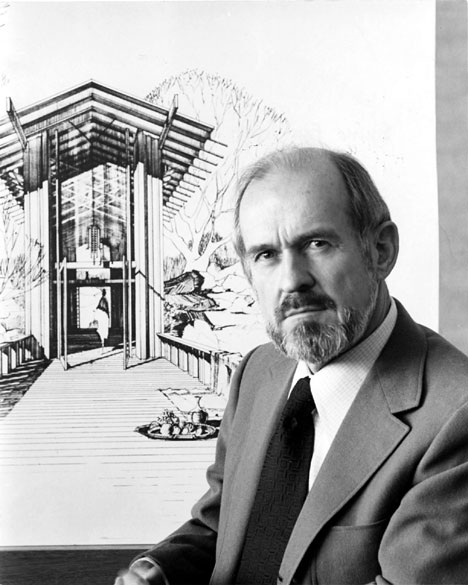
E. Fay Jones
(1921 – 2004) Pine Bluff, AR
E. Fay Jones

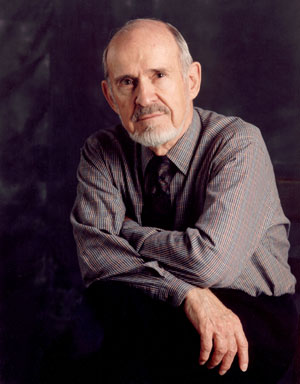
Historical Information
Euine Fay Jones was born to parents Euine Fay and Candy Louise Jones in Pine Bluff, AR on January 31, 1921.
His early interests were in drawing, painting, and building. He built a tree house with a working chimney out of salvage materials.
Jones saw a film about the Johnson Wax building in Racine, Wisconsin by Frank Lloyd Wright. This is where he found that art and construction could come together.
In 1938 he enrolled at University of Arkansas where he studied Engineering. At the time there was not an Architecture program offered.
In 1942 Fay enlisted in the US Navy and became a patrol pilot. In 1943 Fay and Gus were married in San Francisco.
In 1946 Jones returned to Fayetteville to study Architecture. It was during a school field trip that he met Frank Lloyd Wright in 1949.
In the summer of 1953 Jones and his family were invited to come join Frank Lloyd Wright at his home and design studio, Taliesin, in Spring Green, Wisconsin.
In 1951 Jones received his Master’s in Architecture from Rice University. That same year he joined the faculty at University of Oklahoma.
1974 Jones became the first Dean of the University of Arkansas School of Architecture while his firm was thriving.
In 1978 Jim Reed, a California school teacher, asked Fay to design a “Little Glass Chapel in the Woods” near Eureka Springs, AR which would later be known as his masterpiece, “Thorncrown”.
In 1990 Fay Jones received the AIA Gold Medal which is the highest honor one can receive from the American Institute of Architects. President George H.W. Bush presented the gold medal to Jones at a White House dinner where and Prince Charles was a keynote speaker.
At age 83, Jones passed away on August 31, 2004 leaving behind his wife, Mary Elizabeth “Gus”, and their two daughters. His ashes were spread at Thorncrown Chapel.
Major Works of E. Fay Jones
Stoneflower, 1965
Herber Springs, AR
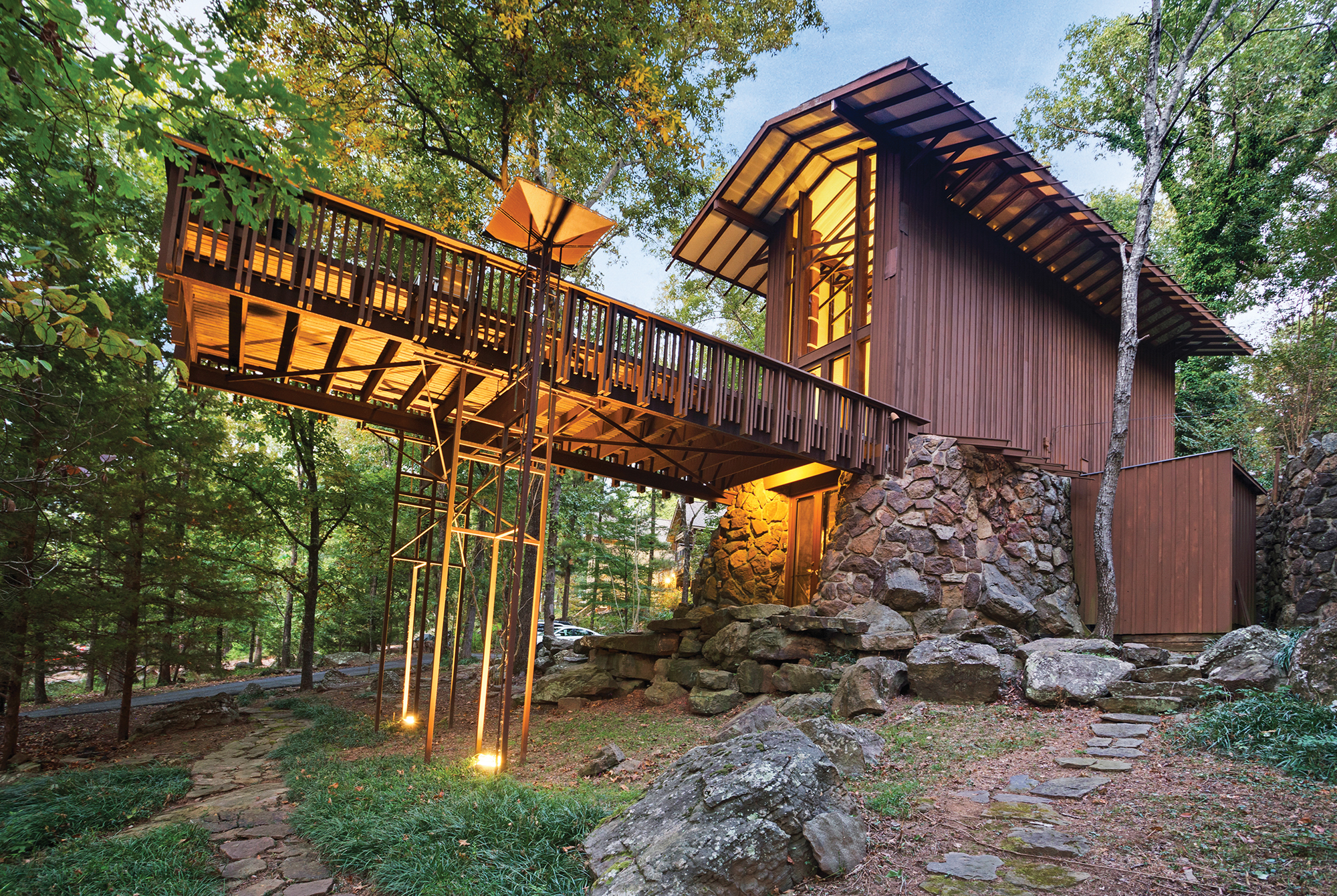
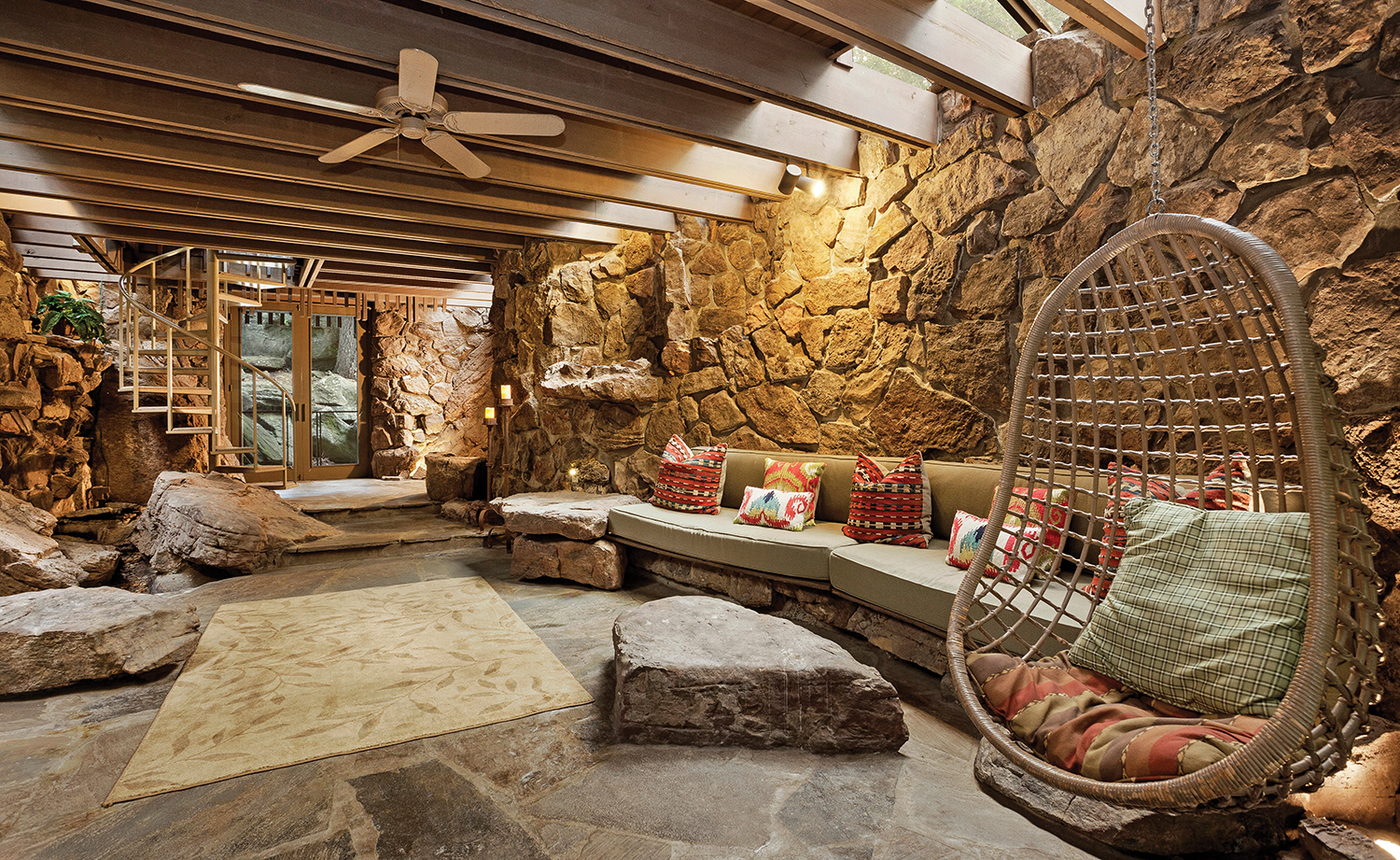
“The Shaheen-Goodfellow Cottage is better known as “Stoneflower” due to the narrow upper story appearing to grow out of the large stone base. The design’s inspiration was simple. Shaheen and Goodfellow wanted something unique but were on a limited budget. Due to the large number of boards, he developed the idea for the intersecting beams to support the ceiling. His solution lead to a vertical focus as opposed to a horizontal focus. The stone boulders were used to make a cave-like lower level with inner plantings.”
Thorncrown Chapel, 1980
Eureka Springs, AR
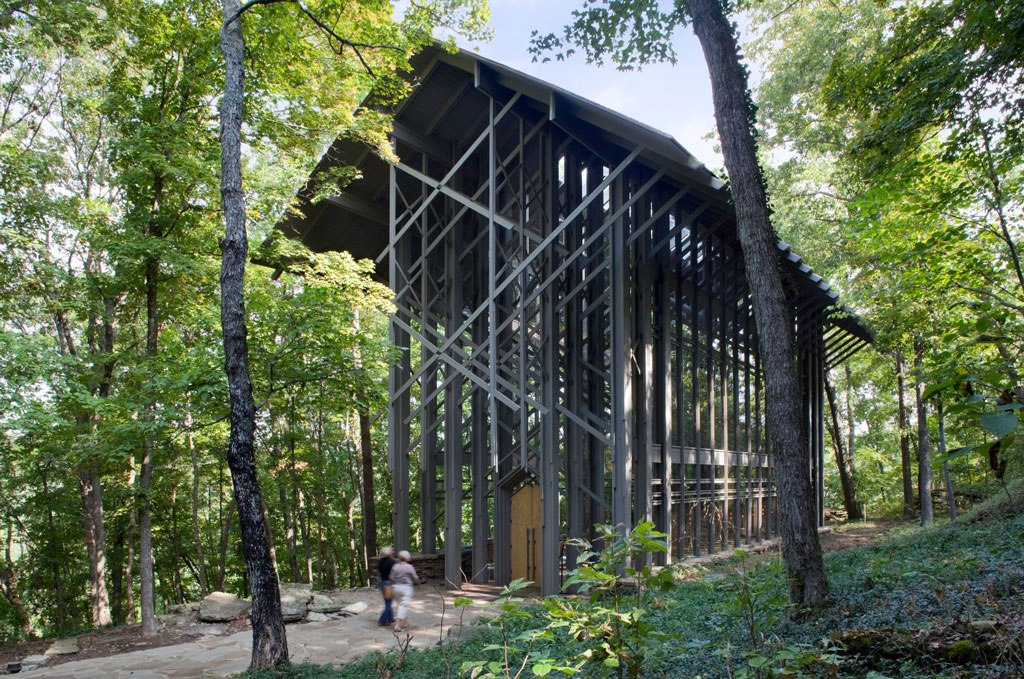
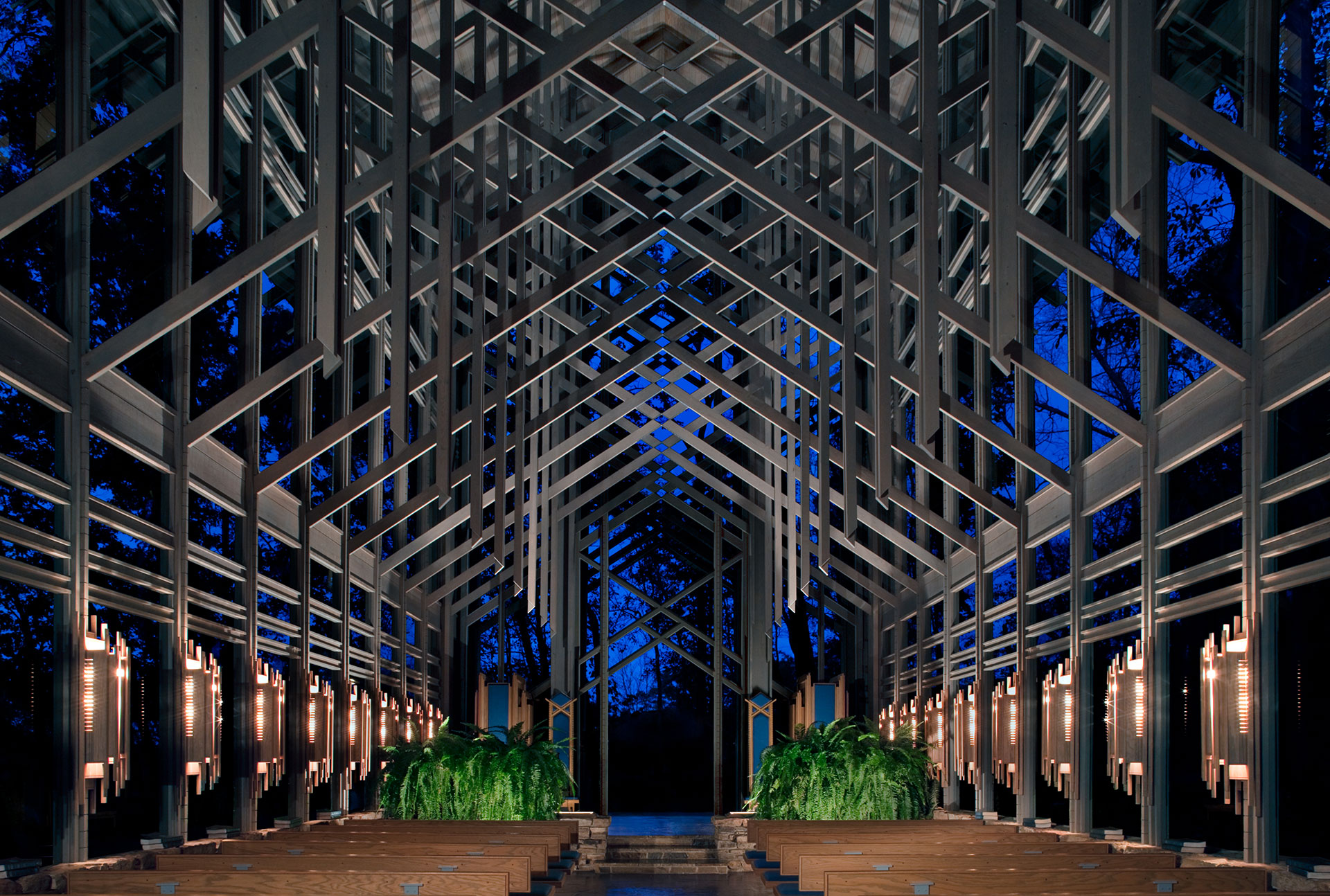
“Hidden in the middle of the forests surrounding Arkansas’ Ozark Mountains, Thorncrown Chapel rests amongst the oaks, pines and maples. The humble chapel, designed by Euine Fay Jones, is less than 35 years old – yet it’s on the U.S. Historic register, has been named one of the AIA’s top ten buildings of the 20th century, and has even been called the best American building since 1980.”
Mildred B. Cooper Memorial Chapel, 1988
Bella Vista, AR
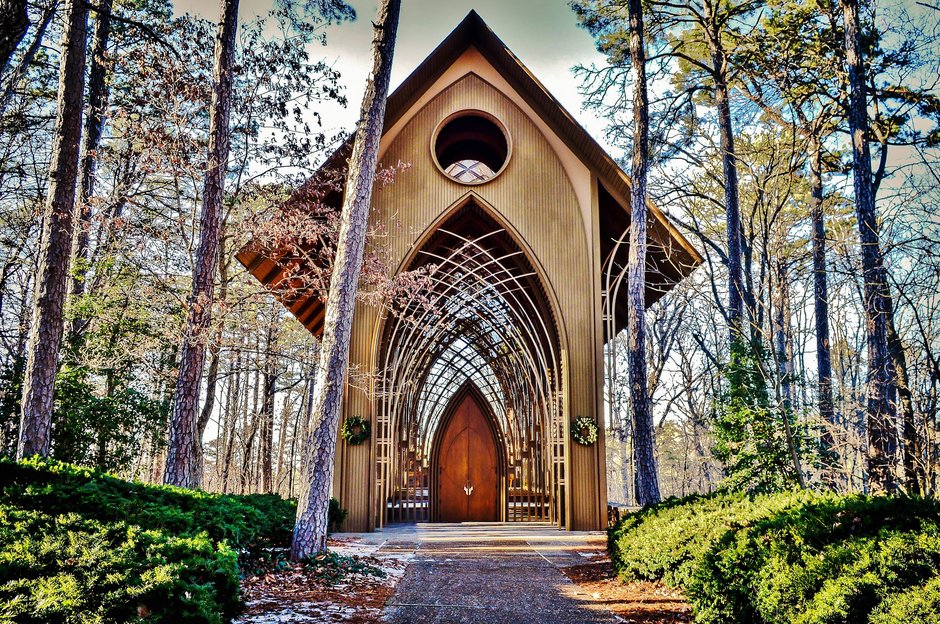
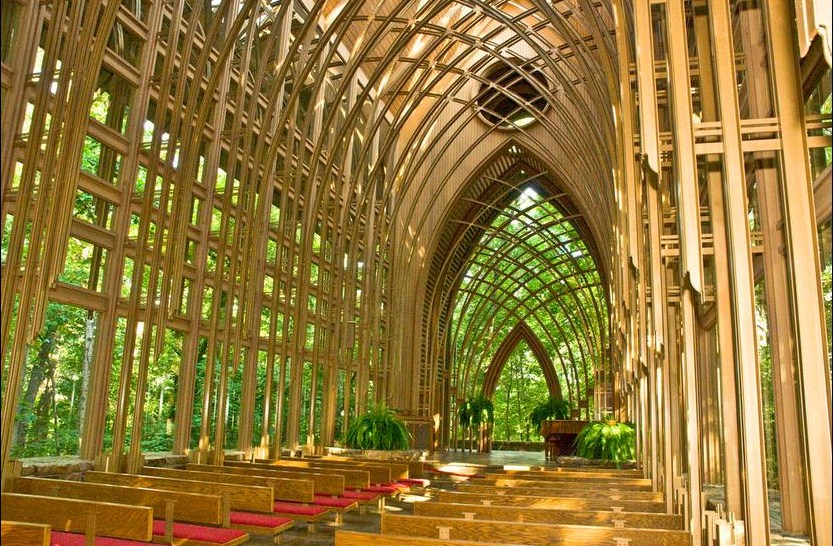
“Designed by architect, E. Fay Jones and Maurice Jennings of Fayetteville, AR, the chapel is constructed around 15 main arches towering 50 feet high. Within each of the 16 arches are three or four Gothic arches. The Gothic style was chosen for its enduring quality, a quality which is as awe inspiring today as it was in Fourteenth Century Europe.”
Characteristics
Jones is best known for his organic architecture of chapels and homes throughout Arkansas.
Motifs & Ornamentation
Stone, wood, glass, Gothic arches, tall ceilings, skylights, symmetrical, earth toned, and low-pitched roofs.
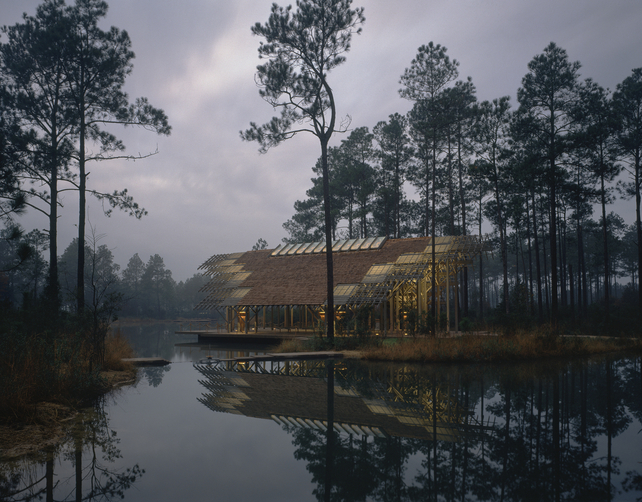
Picayune, MS
Influences on Other Designers
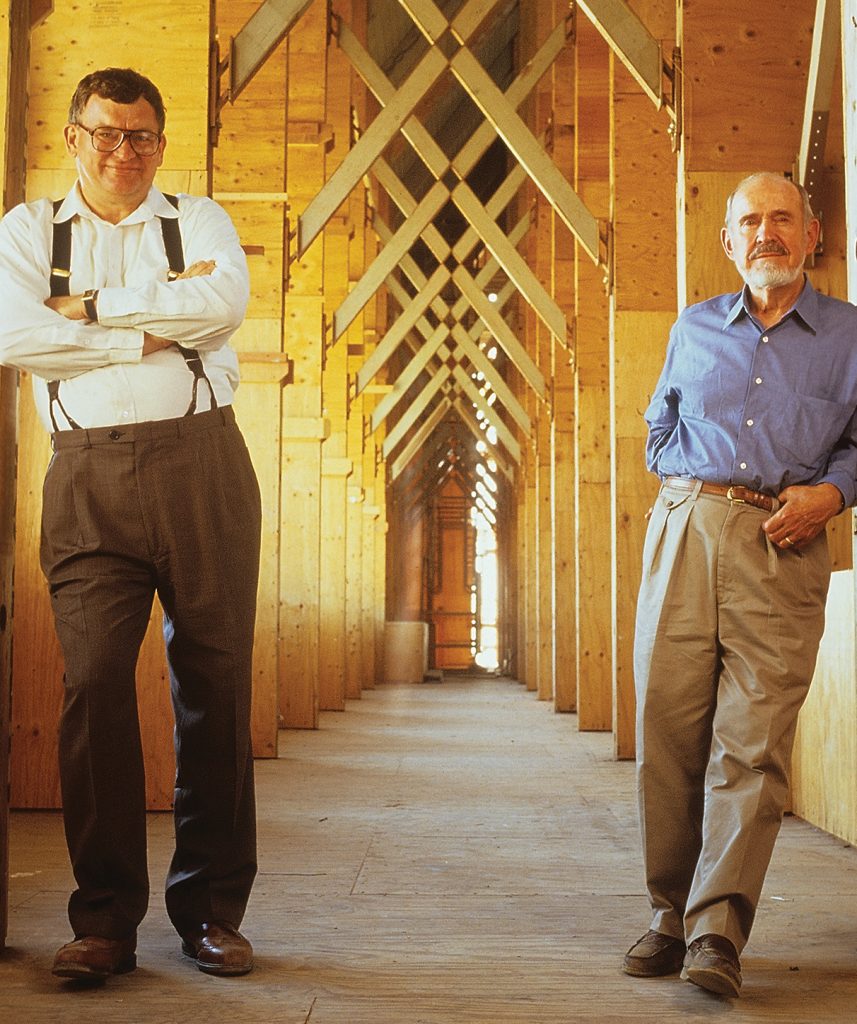
The Gothic and Organic influence of Fay Jones can be seen in his longtime partner’s work, Maurice Jennings. Jennings worked with Fay for 25 years.
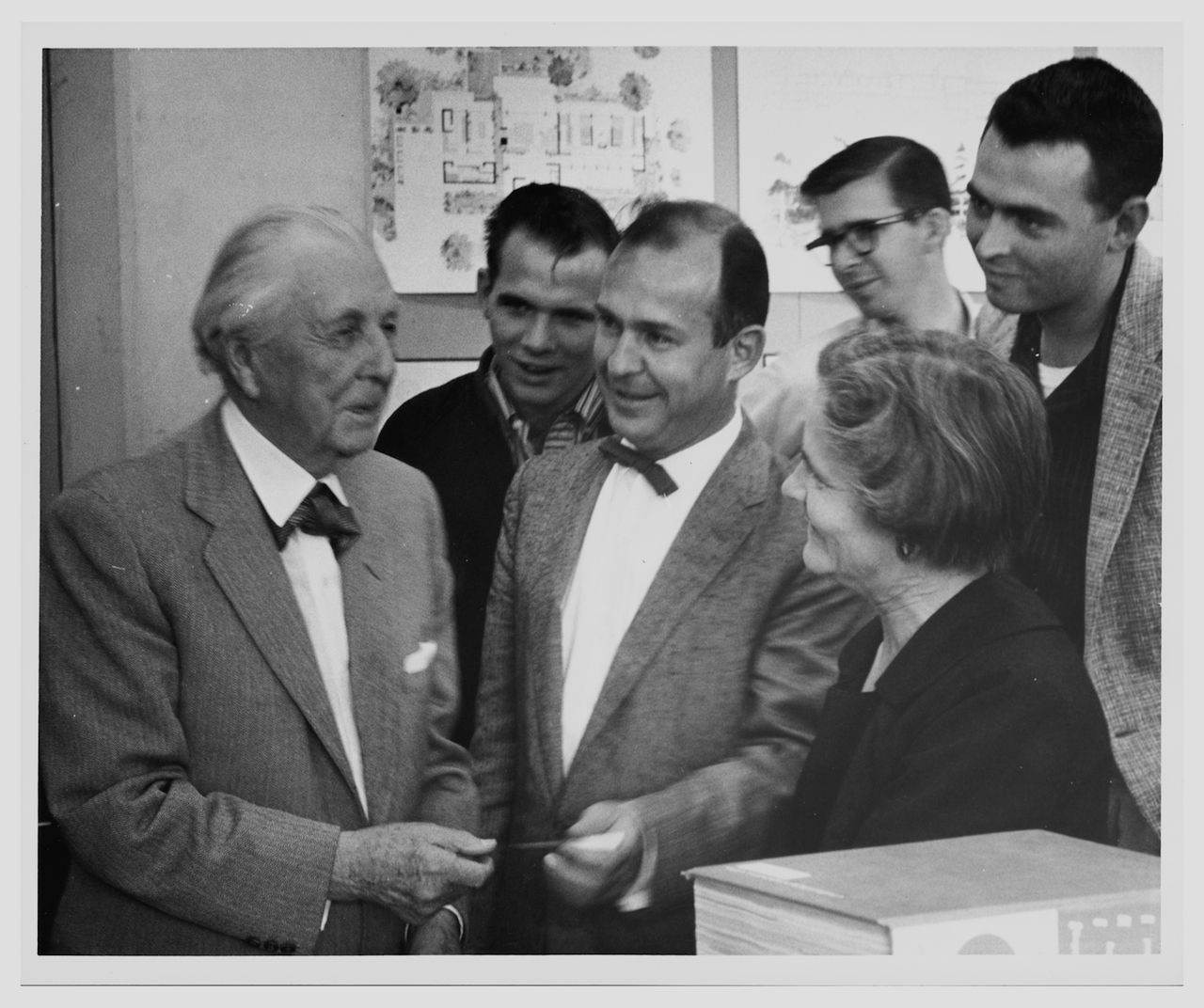
Fay Jones was Frank Lloyd Wright’s best-known apprentice.
Both O’Neil Ford and Fay Jones are noted for their homes and chapels. The two are also generally known their regional work and use of natural materials.
Videos
Interesting Facts
“Eunie Fay Jones stopped using his first name, an old Welsh form of John pronounced “u-wan,” because people had trouble saying it.”
“…these buildings were not made to be fashionable or to win prizes, but really, only to please those who would use them…and to belong to the places where they’re built.” -Fay Jones
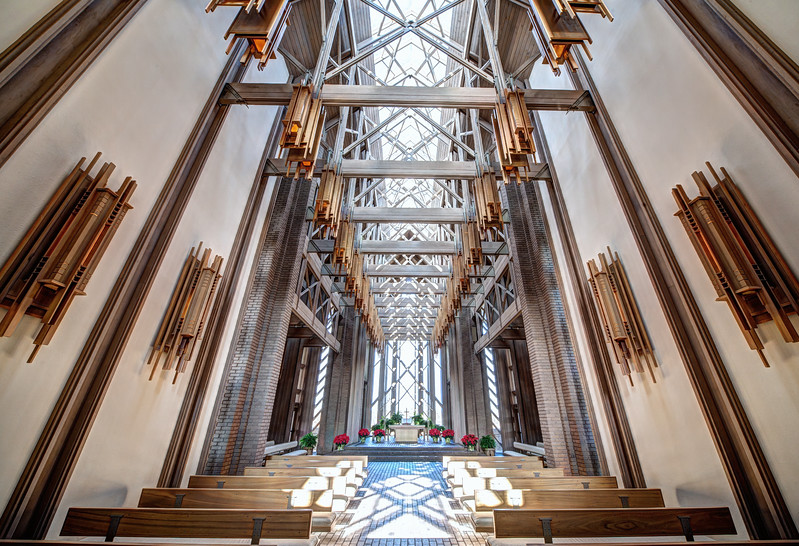
You can view Fay Jones’ work in Fort Worth at the
Marty Leonard Chapel, 1990
References
Cooper, M. (2019). Mildred B. Cooper Memorial Chapel. Retrieved April 14, 2019, from http://www.cooperchapel.com/about.html
Galloway, A. (2018, November 07). AD Classics: Thorncrown Chapel / E. Fay Jones. Retrieved April 14, 2019, from https://www.archdaily.com/533664/ad-classics-thorncrown-chapel-e-fay-jones
Ivy, R. (2012). Fay Jones. Retrieved 2012, from https://crystalbridges.org/wp-content/uploads/2016/04/FayJonesSiteGuide.pdf
Pope, L. (2019). The Architecture. Retrieved April 14, 2019, from https://www.lenapope.org/marty-leonard-chapel/general-information/architecture/
STONEFLOWER – Heber Springs, AR, USA. (n.d.). Retrieved April 14, 2019, from https://plansmatter.com/view-rentals/stoneflower-heber-springs-ar-usa
Thurber, J. (2004, September 03). E. Fay Jones, 83; Wright Pupil With Own Vision. Retrieved April 14, 2019, from https://www.latimes.com/archives/la-xpm-2004-sep-03-me-jones3-story.html
 Discovering Designers by Raven